
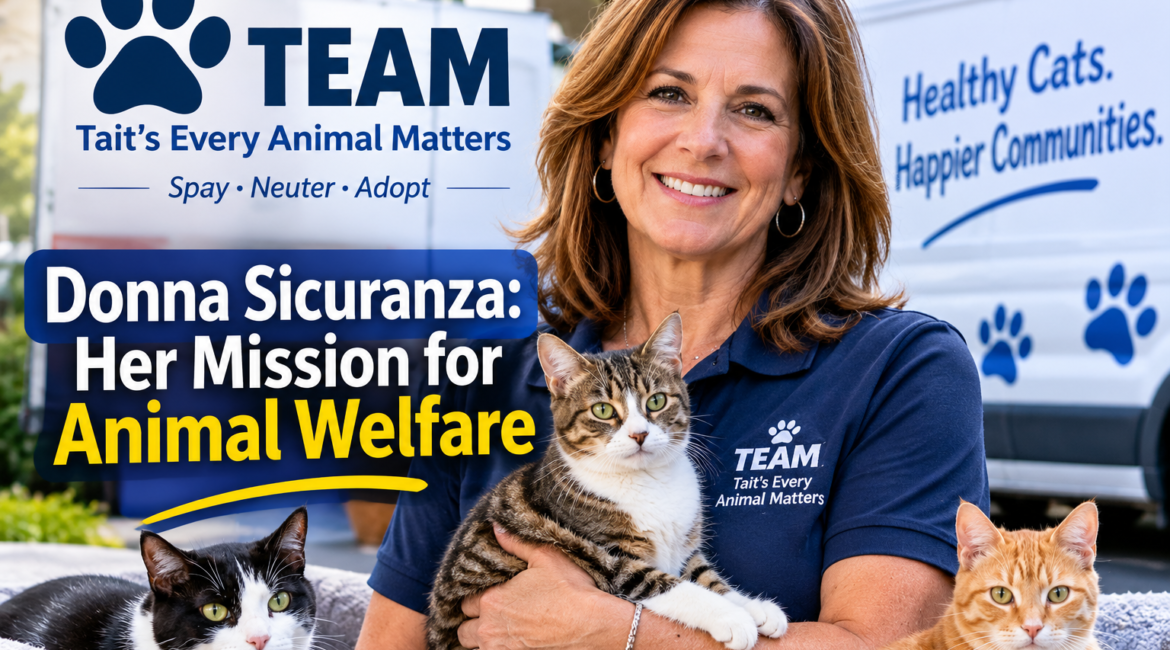
When people search for Donna Sicuranza, they may come across a story connected with animal welfare, community support, and efforts to control feline overpopulation. Her professional journey is closely associated with Tait’s Every Animal Matters (TEAM), a nonprofit organization based in Connecticut, United States.
Rather than becoming known through entertainment or mainstream celebrity culture, Donna Sicuranza has gained public recognition through her involvement in animal welfare initiatives. Her work with TEAM has focused on making veterinary services more accessible and helping reduce the number of unwanted cats and kittens.
One of the most important parts of this work is the organization’s mobile feline spay and neuter clinic. The programme brings essential veterinary services closer to communities, offering practical support to cat owners and people who care for homeless or feral cats.
This article explores Donna Sicuranza’s professional background, her connection with TEAM, the development of the mobile clinic, and the wider importance of her animal welfare work.
Who Is Donna Sicuranza?
Donna Sicuranza is an animal welfare professional associated with Tait’s Every Animal Matters, commonly known as TEAM. The organization identifies her professionally as Donna Sicuranza Marconi and lists her as its Executive Director.
Her public work is primarily connected with nonprofit administration, animal care initiatives, and efforts to improve access to veterinary services throughout Connecticut.
The central idea behind her work is straightforward: preventing unwanted litters can make a meaningful difference to animal welfare. When cats are not spayed or neutered, their populations can increase quickly, placing additional pressure on animal shelters, rescue organizations, and local communities.
Donna’s association with TEAM reflects a long-term commitment to addressing this problem through accessible veterinary care rather than relying only on rescuing animals after they become homeless.
Although her professional activities are documented through organizational publications and public records, detailed information about her private life is limited. Her exact birth date, age, and personal financial information should not be treated as established facts without reliable confirmation.
Donna Sicuranza and Tait’s Every Animal Matters
Tait’s Every Animal Matters is a Connecticut nonprofit organization dedicated to improving animal welfare. It was established through a bequest from Vernon A. Tait, a businessman and animal lover whose contribution helped make the organization’s programmes possible.
TEAM developed an approach that focuses on preventing feline overpopulation by making spay and neuter services more affordable and accessible.
Donna Sicuranza became closely connected with the organization’s leadership and development. Her work helped support the administration and continued operation of a programme designed to reach cat owners who might otherwise struggle to access veterinary services.
TEAM’s mission is especially important for communities where veterinary expenses, transportation difficulties, or limited access to animal healthcare can prevent people from getting timely treatment for their pets.
The organization also welcomes domestic and feral cats through its mobile clinic, recognizing that responsible animal welfare must include both household pets and free-roaming cat populations.
How the Mobile Feline Clinic Started
One of the most significant developments associated with Donna Sicuranza’s work was the creation of TEAM’s mobile feline spay and neuter clinic.
The idea began taking shape in 1996 under the direction of veterinarian Dr. John A. Caltabiano, who was then TEAM’s president, and executive director Donna Sicuranza.
Their approach addressed a practical problem. Many cat owners and animal caretakers needed affordable veterinary procedures, but traditional clinic arrangements were not always convenient or financially accessible.
Instead of expecting every caretaker to travel long distances, the organization developed a mobile service that could visit different communities.
The clinic officially began operating on March 1, 1997. According to TEAM’s historical account, ten cats received spay or neuter procedures and vaccinations during its first day of operation.
The early response demonstrated the demand for affordable feline healthcare. Within six months, the organization had sterilized approximately 5,000 cats, and the number had reached around 8,000 by its first anniversary.
This early progress helped establish the mobile clinic as an important part of Connecticut’s animal welfare network.
Donna Sicuranza’s Partnership With Dr. John A. Caltabiano
The development of TEAM’s mobile clinic involved cooperation between nonprofit leadership and veterinary expertise.
Dr. John A. Caltabiano played a central role in establishing the programme. His veterinary experience and interest in mobile animal healthcare helped turn the concept into a functioning service.
Donna Sicuranza contributed through her leadership and organizational involvement. Their combined efforts helped establish a programme that could deliver veterinary services beyond the traditional clinic environment.
Dr. Caltabiano passed away in November 2009. Connecticut Department of Agriculture material published after his death identified Donna Sicuranza as his longtime partner and stated that she would continue his work at TEAM.
This marked an important period for the organization. Continuing a programme after the loss of a key founder required commitment, administrative stability, and ongoing support from veterinary professionals and the wider community.
The mobile clinic continued operating, keeping its original purpose at the centre of its activities.
Fighting Feline Overpopulation Through Prevention
Feline overpopulation is a serious animal welfare challenge. Cats can reproduce quickly, and unwanted litters may create difficulties for families, shelters, rescue groups, and communities.
When there are more cats than available homes and resources, animals can face abandonment, illness, hunger, and unsafe living conditions.
Donna Sicuranza’s work with TEAM is connected with a preventive approach to this issue.
Spaying and neutering help prevent unplanned pregnancies and reduce the number of kittens entering already crowded rescue systems. These procedures also support responsible pet ownership and long-term animal population management.
TEAM makes this approach available through its mobile veterinary programme, which serves both domestic and feral cats.
The organization also supports Trap-Neuter-Return, commonly called TNR. This method involves humanely trapping free-roaming cats, arranging sterilization and appropriate veterinary care, and returning them to their familiar outdoor environments.
TNR can help prevent further population growth while allowing established cat colonies to remain in their surroundings.
The Impact of TEAM’s Veterinary Services
TEAM’s mobile clinic has developed into a long-running animal welfare programme.
According to the organization’s current information, its veterinarians have sterilized and vaccinated more than 225,000 cats since the clinic began in 1997.
This figure represents the combined work of the veterinary team, administrative staff, supporters, donors, and community members. It should not be attributed to one individual alone.
The programme provides services that can include:
- Spay and neuter surgery.
- Rabies and other recommended vaccinations.
- Brief veterinary examinations.
- Nail trimming.
- Ear mite treatment when needed.
- Additional preventive care and supplies.
The mobile service travels to communities across Connecticut, helping residents access veterinary assistance without always needing to visit a traditional animal hospital.
For people caring for multiple cats, including outdoor and feral populations, accessible services can make responsible animal care more manageable.
Why Mobile Veterinary Clinics Matter
Mobile veterinary clinics offer a practical solution to barriers that prevent animals from receiving proper healthcare.
Some families live far from veterinary facilities. Others may have limited transportation or find the cost of multiple procedures difficult to manage.
A mobile clinic brings services closer to the people who need them. This can encourage more owners and caretakers to arrange preventive treatment before problems become harder to manage.
The approach also benefits animal rescue volunteers who regularly care for stray cats and outdoor colonies.
TEAM’s experience demonstrates how a mobile service can become a lasting part of a community’s animal welfare infrastructure.
Its model also shows that preventing animal overpopulation requires more than temporary rescue efforts. It needs consistent access to veterinary services, public awareness, funding, and cooperation.
Donna Sicuranza’s Role in Nonprofit Leadership
Animal welfare organizations need more than veterinary professionals to operate successfully. They also depend on administration, communication, scheduling, financial support, and relationships with the public.
An executive director helps maintain the organizational structure that allows programmes to continue serving their communities.
Donna Sicuranza’s position at TEAM places her within this important part of nonprofit work.
The mobile clinic requires coordination between its administrative staff, veterinarians, technicians, local communities, and people seeking appointments.
The organization also depends on donations and public support to maintain its services.
Her long association with TEAM highlights the importance of leadership in sustaining an animal welfare programme over many years.
Jessica Dorrell is another public figure whose story has attracted attention due to her involvement in a widely discussed controversy.
How the Community Can Support Animal Welfare
The success of animal welfare initiatives depends on public participation.
People who want to help cats in their communities can support responsible pet care in several ways.
First, cat owners can discuss appropriate spay and neuter procedures with qualified veterinary professionals. Preventive care can help avoid unwanted litters and improve long-term animal population management.
Second, community members can support reputable animal charities through donations, fundraising, or volunteering.
Third, people caring for outdoor cats can learn about humane TNR practices and seek guidance from experienced animal welfare organizations.
Finally, sharing accurate information about affordable veterinary services can help more families find the support they need.
These actions may seem small individually, but consistent community involvement can make a meaningful difference.
What Makes Donna Sicuranza’s Work Important?
Donna Sicuranza’s public professional story is closely connected with a practical approach to animal welfare.
Instead of focusing only on individual rescue cases, TEAM’s programme addresses one of the underlying reasons that shelters and communities face increasing numbers of unwanted cats.
The mobile clinic provides a way to bring preventive veterinary care directly to people and animals who may otherwise have limited options.
Its long operating history also demonstrates the value of maintaining community programmes beyond short-term campaigns.
The organization’s reported achievement of more than 225,000 cats sterilized and vaccinated since 1997 illustrates the scale of its collective work.
Donna’s involvement in this long-running initiative makes her an interesting figure in Connecticut’s nonprofit animal welfare community.
Conclusion
Donna Sicuranza’s professional journey is closely connected with the development and continued operation of Tait’s Every Animal Matters. Through her association with the organization, she has been part of a long-term effort to improve feline welfare and make preventive veterinary services more accessible.
The TEAM mobile clinic represents an important example of how practical planning, veterinary expertise, nonprofit leadership, and community support can work together.
Since beginning operations in 1997, the programme has helped sterilize and vaccinate more than 225,000 cats, according to TEAM. That achievement reflects years of collective dedication to reducing feline overpopulation and supporting responsible animal care.
For readers interested in animal welfare, Donna Sicuranza’s story offers an example of how sustained community-focused work can create a lasting impact.
Frequently Asked Questions About Donna Sicuranza
1. Who is Donna Sicuranza?
Donna Sicuranza, also listed professionally as Donna Sicuranza Marconi, is an animal welfare nonprofit leader associated with Tait’s Every Animal Matters in Connecticut. TEAM identifies her as its Executive Director.
2. What is Donna Sicuranza known for?
She is known for her involvement with TEAM and its mobile feline spay and neuter programme, which aims to make veterinary services more accessible and reduce unwanted cat populations.
3. What is Tait’s Every Animal Matters?
Tait’s Every Animal Matters, or TEAM, is a nonprofit organization based in Connecticut. It operates a mobile veterinary clinic that provides spay, neuter, and vaccination services for cats.
4. When did the TEAM mobile clinic begin?
The mobile clinic officially started operating on March 1, 1997. Its development was planned in 1996 with the involvement of Dr. John A. Caltabiano and Donna Sicuranza.
5. How many cats has TEAM helped?
TEAM reports that its veterinarians have sterilized and vaccinated more than 225,000 cats since 1997. This is an organizational achievement involving its entire team.
6. Who was Dr. John A. Caltabiano?
Dr. John A. Caltabiano was a veterinarian who played an important role in establishing TEAM’s mobile feline clinic. He worked alongside Donna Sicuranza in developing the programme.
7. Is Donna Sicuranza a veterinarian?
TEAM identifies Donna Sicuranza Marconi as its Executive Director, not as a member of its veterinary staff.
8. What is Donna Sicuranza’s age?
Her exact date of birth and age are not reliably established in the public information reviewed for this article.
9. Where is TEAM based?
Tait’s Every Animal Matters is headquartered in Westbrook, Connecticut, United States. Its mobile clinic travels to communities throughout the state.
10. How can people support TEAM?
People can support the organization through donations, fundraising, sharing information about its services, and helping responsible cat owners access veterinary care.

Finley Elaine Griffin: Age, Parents, Siblings & Biography
[…] At her current age, Finley is still experiencing childhood and has plenty of time to discover her interests and ambitions. Her future should not be defined by her parents’ professional achievements. Read more Donna Sicuranza […]