Introduction
Creating user accounts manually can become time-consuming, especially for businesses that onboard many customers, employees, or students every day. An auto account maker helps automate this process by generating user accounts based on predefined rules, reducing repetitive work while improving efficiency.
Whether you’re managing an online learning platform, a company portal, or a customer management system, automation can simplify account creation and minimize human error. This guide explains what an auto account maker is, how it works, its advantages, and the features beginners should look for when choosing a solution.
What Is an Auto Account Maker?
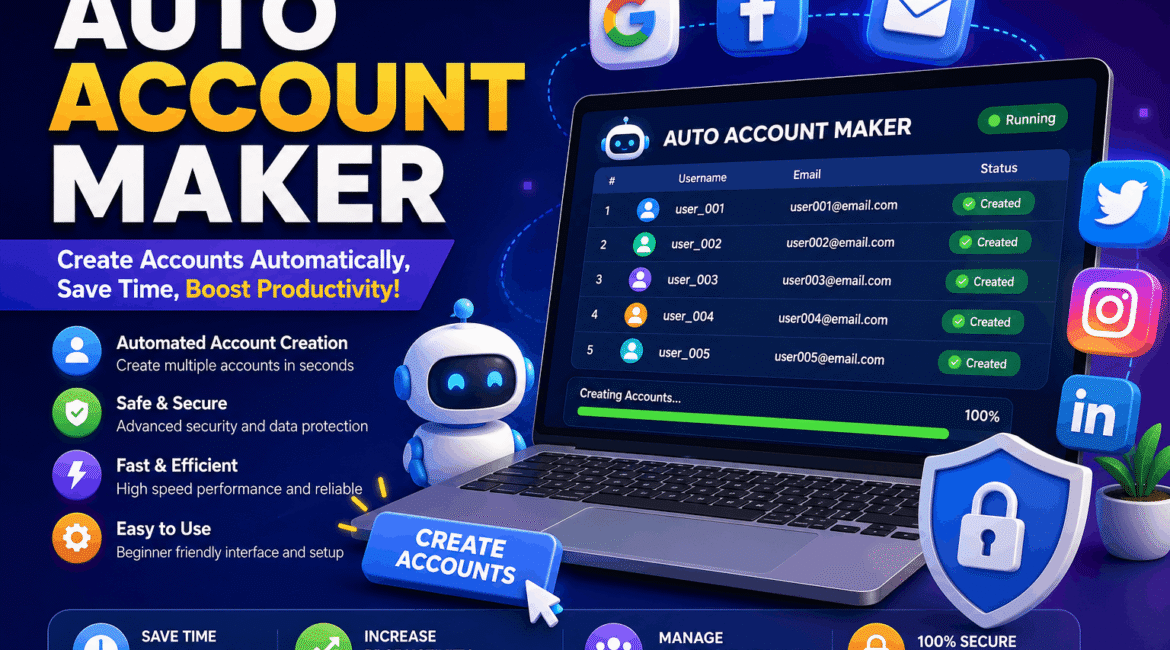
An auto account maker is software that automatically creates user accounts within an authorized system. Instead of manually entering names, email addresses, usernames, and permissions one by one, the software performs these tasks based on your settings.
Businesses often use these tools to onboard employees, register new customers, or create accounts for students and members. The goal is to save time while maintaining accuracy and consistency.
How Does an Auto Account Maker Work?
Although features vary by platform, most account creation tools follow a similar process:
- Collect user information from a registration form or database.
- Validate the entered data.
- Generate usernames or user IDs automatically.
- Assign roles or permissions.
- Create the account in the authorized system.
- Send a welcome email or activation link.
- Record the process in activity logs.
This workflow reduces manual effort while ensuring every new account follows the same standards.
Benefits of Using an Auto Account Maker
Saves Time
Automation eliminates repetitive data entry, allowing administrators to focus on more important tasks.
Reduces Errors
Typing mistakes can create login problems. Automated systems use predefined rules to improve accuracy.
Faster Onboarding
New employees, customers, or students can receive their accounts much more quickly.
Consistent User Management
Every account follows the same naming conventions, permissions, and security policies.
Better Productivity
Organizations can handle larger numbers of registrations without increasing administrative workload.
Key Features to Look For
When comparing account creation software, beginners should look for these features:
- Easy-to-use dashboard
- Bulk account creation
- Role and permission management
- Secure password generation
- Email verification
- Activity logs
- Import from CSV or spreadsheets
- Integration with existing systems
- Custom username rules
- User management tools
Where Auto Account Makers Are Commonly Used
These tools are useful in many legitimate environments, including:
Educational Institutions
Schools and universities often create accounts for students and teachers at the beginning of each academic year.
Businesses
Companies automate employee account creation for internal systems.
Membership Organizations
Clubs and associations use automated registration for new members.
Customer Portals
Businesses can automatically create accounts after customers complete a purchase or sign-up form.
Online Learning Platforms
Training providers quickly enroll learners into courses with preconfigured accounts.
Security Best Practices
Automation should always be paired with strong security.
Consider these recommendations:
- Require strong passwords.
- Enable multi-factor authentication where available.
- Verify email addresses before activating accounts.
- Limit administrator permissions.
- Monitor account activity regularly.
- Remove inactive accounts when appropriate.
- Keep software updated with the latest security patches.
Tips for Beginners
If you’re new to account automation:
- Start with a small group of users.
- Test your workflow before using it widely.
- Back up important user data.
- Review permission settings carefully.
- Train administrators on how the software works.
- Document your account creation process.
Common Mistakes to Avoid
Many beginners make these mistakes:
- Giving all users the same permissions.
- Skipping email verification.
- Using weak password policies.
- Ignoring activity logs.
- Forgetting to remove unused accounts.
- Failing to test automation rules before deployment.
Avoiding these issues will help keep your account management process organized and secure.
How to Choose the Right Auto Account Maker
When selecting a solution, consider:
- Ease of use
- Security features
- Scalability
- Integration with your existing software
- Customer support
- Pricing
- Reporting capabilities
- Customization options
Choose a tool that matches your organization’s size and long-term needs.
Conclusion
An auto account maker is a valuable solution for organizations that need to create authorized user accounts efficiently and consistently. By automating repetitive tasks, these tools save time, reduce errors, and improve the onboarding experience. For beginners, selecting software with strong security, simple management features, and reliable support can make account administration much easier while helping maintain an organized and secure system.
Frequently Asked Questions (FAQs)
1. What is an auto account maker?
An auto account maker is software that automatically creates authorized user accounts based on predefined rules and workflows.
2. Who uses auto account maker software?
Businesses, schools, membership organizations, and online platforms commonly use these tools to simplify user onboarding.
3. Is an auto account maker safe?
Yes, when used on systems you manage and combined with strong security practices such as password policies and email verification.
4. Can beginners use an auto account maker?
Yes. Many modern solutions offer user-friendly interfaces designed for beginners.
5. What are the biggest benefits of account automation?
The main benefits include saving time, reducing manual errors, improving consistency, and speeding up user onboarding.